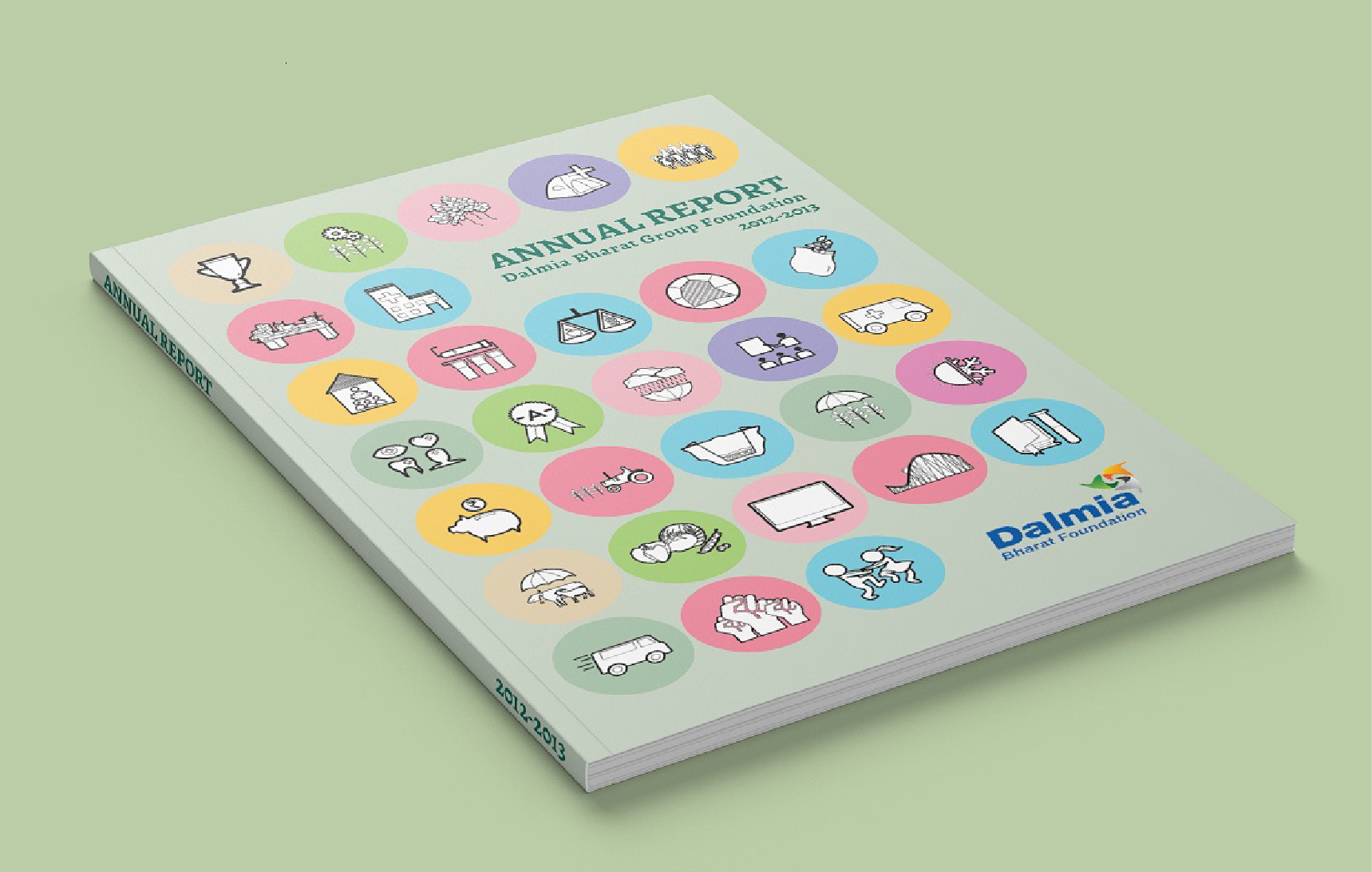
By the third consecutive year of designing the Dalmia Bharat Group Foundation annual report, Wishbox Studio had developed a deep understanding of the organisation, its programs, its people and its ambitions. This familiarity is a genuine creative asset. It allows a design partner to move beyond executing a brief and begin shaping the narrative itself. The 2012–13 report is where that shift became most visible.
A New Structural Idea
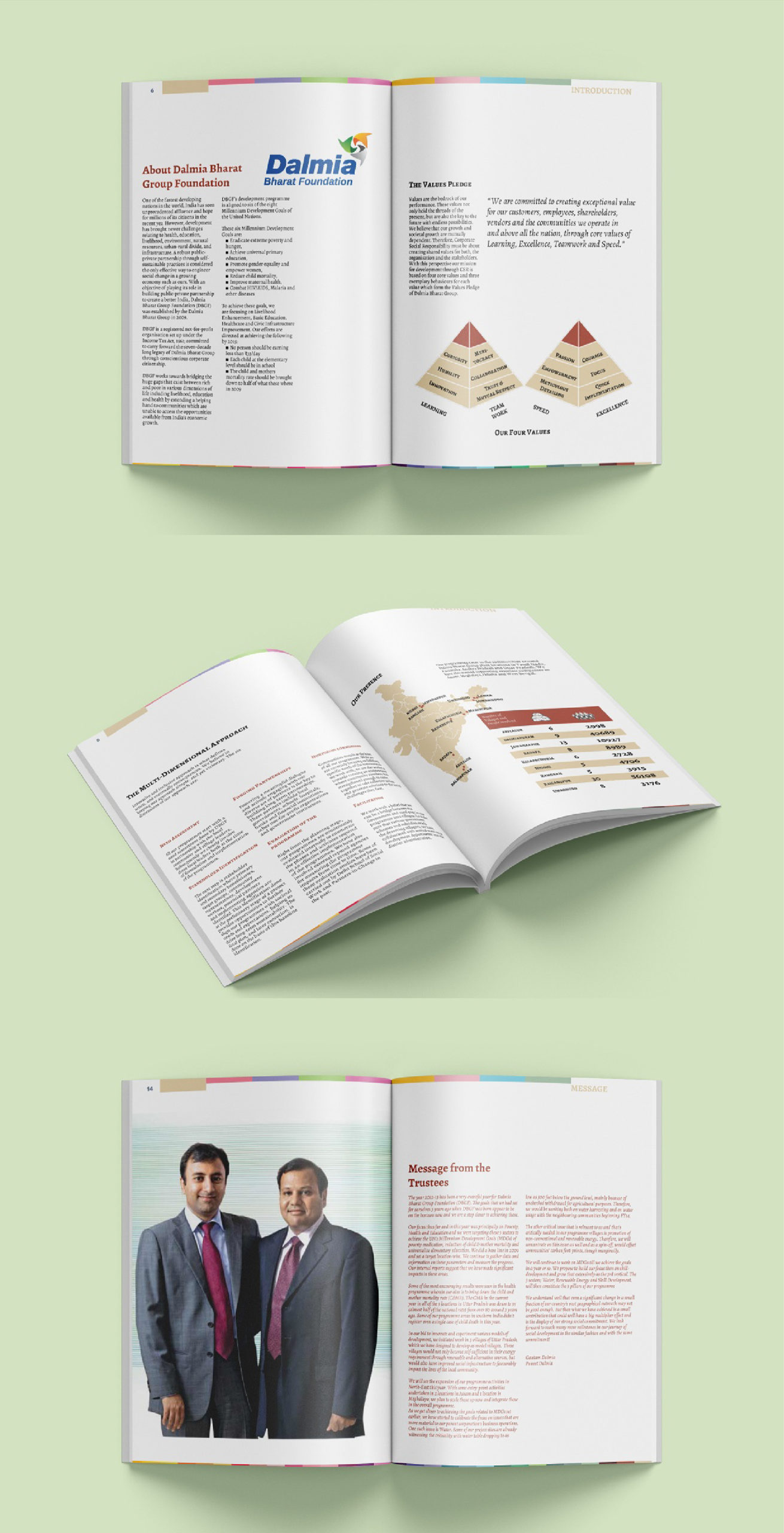
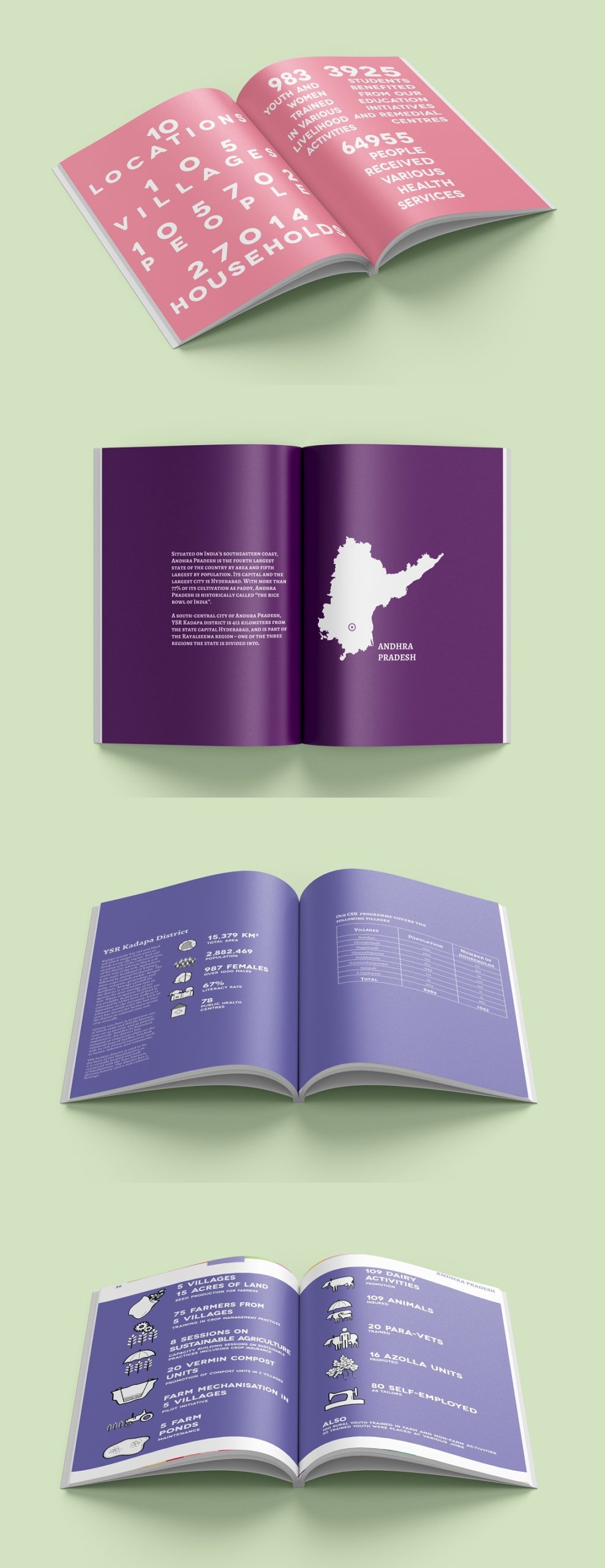
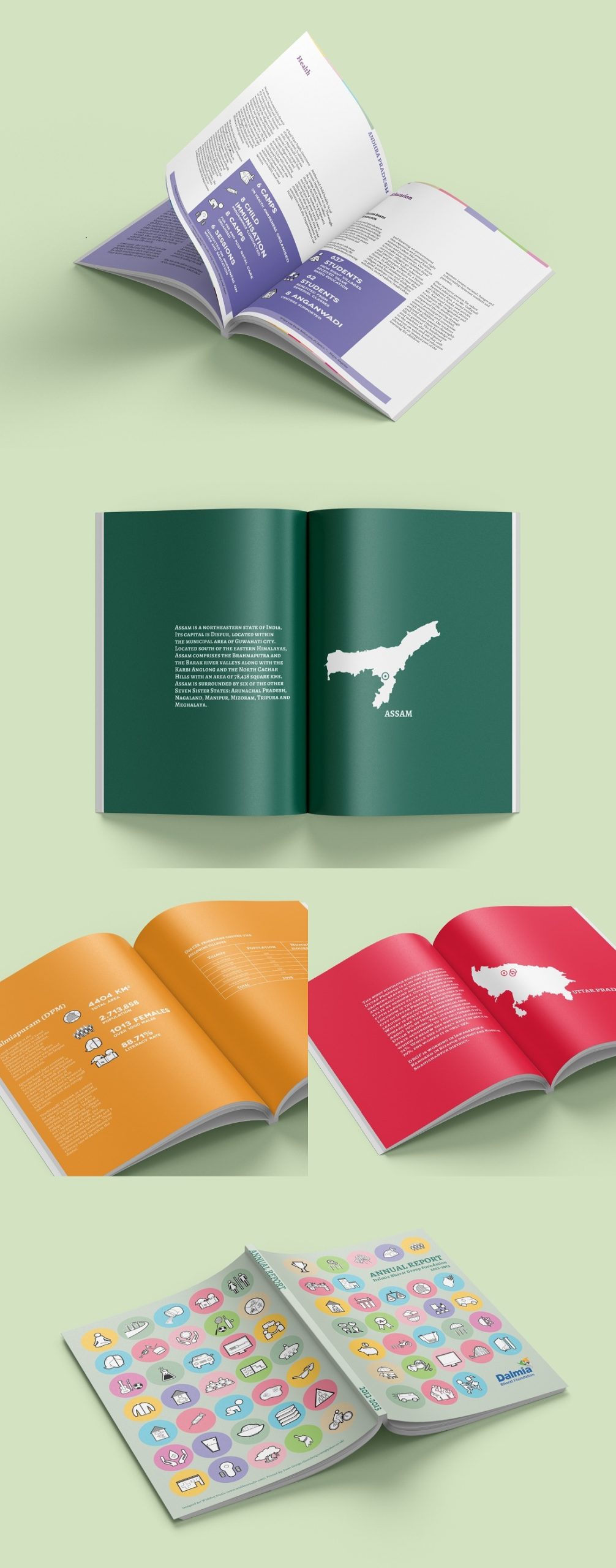
In the previous two years, the report had been structured around the Foundation’s program areas, organising content by sector or thematic focus. For the 2012–13 report, Wishbox proposed a fundamentally different structure. Rather than foregrounding what the Foundation does, the new approach foregrounded where it does it, placing the countrywide geographic presence of the organisation at the centre of the narrative.
This is a meaningful distinction in CSR communication design. A program-focused structure tells readers what the organisation works on. A geography-focused structure shows the scale of its reach and the breadth of its impact across India. For a Foundation whose outreach spans multiple states and communities, this shift in framing made the work feel more tangible and more impressive, not through exaggeration but through clearer storytelling.
Why This Approach Works
The decision to emphasise geographic presence rather than program taxonomy reflects a mature understanding of how impact reports are read and remembered. Stakeholders, whether corporate partners, government bodies or individual donors, are often most moved by evidence of scale and reach. Seeing a Foundation’s work mapped across the country creates a different kind of conviction than reading about program categories. It answers the question that most stakeholders are quietly asking: how far does this actually go?
The Design Execution
The structural reorientation required a corresponding shift in visual treatment. Maps, geographic data and imagery from across the Foundation’s operating locations became central to the design language of the 2012–13 report. This is corporate publication design that uses geography as both a framework and a proof point, turning the report’s spatial logic into a form of evidence.
The Value of a Long-Term Design Partnership
Three years of consecutive work on the Dalmia Bharat Group Foundation reports illustrates something important about what a sustained design relationship can produce. Each year, Wishbox brought fresh thinking rather than simply iterating on the previous year’s template. The result is a body of work that grew in ambition and sophistication alongside the organisation it represented, and a clear demonstration of how impact report design can evolve from documentation into genuine storytelling.
Big ambition. Small brand presence?
Let’s design the strategic positioning that attracts the right opportunities.